

How to Take the Fifth Step
June 9, 2026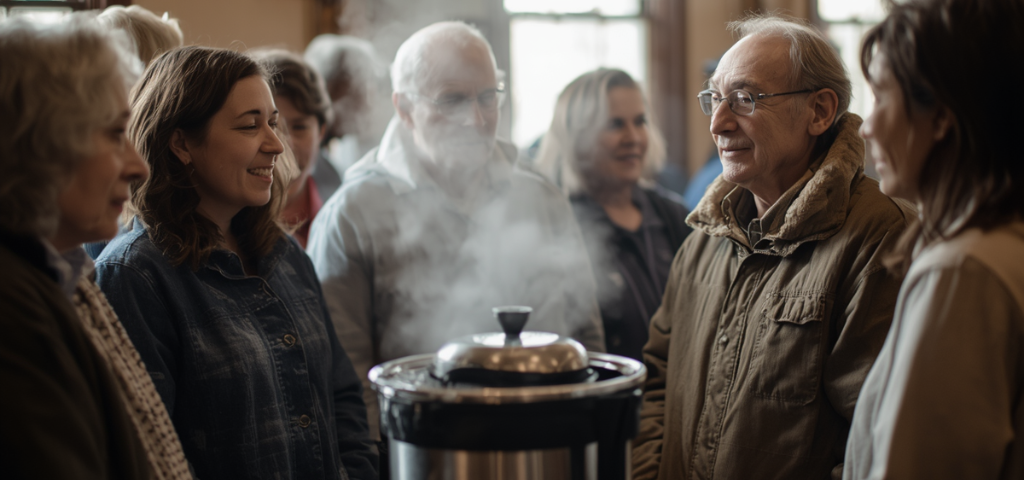
Now that I have reached 35 years of sobriety, I can honestly say I am a longtime member. I am also wise enough to know that it is only “one day at a time,” and there is always something new to learn and someone new to meet.
Looking back at my first few years in AA, I realize just how good I had it. When I first started coming to meetings, I was confident it would be a brief stay. I figured I would learn how to drink and avoid trouble within a few months and be on my way. But something convinced me that I belonged and that I should continue this journey of recovery.
When a friend encouraged me to join a group in the neighborhood, I was reluctant. I knew that neighborhood too well. I had drunk in every bar, café, and nightclub, and had probably shared a drink with most of the people in town at one time or another. It is a small part of the city, and eventually, you meet everyone. My alcoholic thinking told me I already knew what AA people were like, and that it wouldn’t be any different. Still, at my sponsor’s suggestion, I joined the “Let Go Let God” group.
It was an interesting mix of people with a variety of ages and lengths of recovery. The old-timers sat in the same general area of the hall each week, marking their chairs with car keys, while the younger members tended to cluster together. One thing I noticed was that people who had been around a while sat up front. The old-timers made a point of talking to newcomers, pouring coffee, asking if it was their first time, making sure no one stood alone for long. Outgoing and welcoming: that is how I remember them. There was a genuine warmth to how newcomers and visitors were received. People made space, pulled you into conversations, and remembered your name. Before the meeting, after the meeting, there was always a circle, always a connection forming. Fellowship was not an afterthought; it was woven into the fabric of everything.
Many of those old-timers had it hard. Men and women had “lived in the weeds” before getting sober. Their experience, strength, and hope were not polished or rehearsed. They were raw and earned. They spoke about getting sober when society looked down on them with contempt, and there were fewer meetings, fewer resources, and nothing but willingness and each other. It made sobriety feel both fragile and powerful at the same time. These men and women stayed to carry the message because they understood how painful alcoholism could be, and how precious the gift of recovery truly is.
That said, while they were welcoming, they could also be firm. When a speaker wandered off topic, drifting into stories about drugs or relationships, the old-timers were quick to remind them that “it’s about alcohol.” And if a meeting ran too long, you might hear the quiet jingle of coins or keys being dropped on the floor. A gentle but clear signal to “wrap it up.”
The younger members brought a lot of enthusiasm to the program and were equally welcoming. I considered myself one of them when I first joined. Early on, some members invited me to a “sober dance.” My first reaction was a firm no because I could not imagine going to a dance without a drink. I had always needed a few beers before and during any social gathering, and a sober dance seemed awkward at best. But I agreed to go, with a plan to arrive fashionably late and leave early.
I was not prepared for what I walked into. The place was jumping. Everyone was on the dance floor; no one was standing along the walls nursing a drink, which was exactly what I would have been doing. Before I even had a chance to say hello to anyone, a friend grabbed me by the arm and pulled me onto the dance floor. I never had the chance to feel self-conscious because it was simply happening, and it felt great. Everyone in the room was jumping, dancing, and singing without a drop of alcohol. These people were crazy sober, and I loved it. Even some of the old-timers showed up and joined in. To me, this was proof that life did not end when I got sober; it began.
The following week at the meeting, people were still talking about the dance. Then, as always, we turned our attention back to the speakers and their experience, strength, and hope. The old-timers were steady and consistent in their message. The meetings had a rhythm. People showed up, took part, and you could see and feel that consistency, the same faces, the same voices, week after week. It created something I could depend on, something to hold onto when the world felt overwhelming.
Commitments were a big deal back then. You did not just show up; you showed up for something. There were rides to and from meetings, cars packed full of laughter, nerves, and stories. Those rides mattered. They built bonds that meetings alone could not. And on the nights I skipped the meeting, someone always noticed. Someone always reached out to ask if I was okay.
I found my seat early on, front row, slightly to the left. I did not so much choose it as land there, and then it became mine. Week after week, I sat in that same spot, surrounded by people who had been doing the same thing for years. They were rocks. Not in a loud or showy way, but steady, grounded, and unshakable. When they spoke, you listened, because you knew they had lived it.
What stands out most, looking back, is how important it felt to be part of something. Not just attending but belonging. Having a place, a role, a seat. Being counted on. Being known.
I miss that sometimes. Not just the meetings themselves, but the feeling underneath them, the depth of connection, the simplicity of purpose, the way everything seemed to revolve around staying sober and helping the next person do the same.
Now and then, I run into someone from those days. Time has moved on, and life has filled in the spaces, but it never takes long before the conversation circles back. We talk about the group, who sat where, who said what, and who helped us when we did not think we could be helped. And for a moment, it is all right there again: the room, the chairs, the voices, and the quiet understanding and gratitude that we had been part of something special and lifesaving.

AA Cleveland Staff
The views and opinions expressed in this article are those of the author and do not necessarily reflect the policy or position of the AA Cleveland District Office.



All comments are reviewed for anonymity. Learn More